- Home
- Concerts
- Subscription Concerts
- Program A
- No. 2077 Subscription (Program A)
No. 2077 Subscription (Program A)


Program
- NHKSO 100th Anniversary -
Falla / El sombrero de tres picos, ballet suite No. 2 (The Three-Cornered Hat)
Andalusian composer Manuel de Falla (1876–1946) is an eloquent testimony to the intimate relations between the French and Spanish music worlds at the turn of the century. He studied in Madrid with Felipe Pedrell who led modern Spanish musical nationalism. From 1907 to 1914, Falla stayed in Paris where he met Maurice Ravel, Claude Debussy and Russian impresario Sergei Diaghilev. The outbreak of World War made Falla return home to continue to compose in Madrid.
El sombrero de tres picos (The Three-Cornered Hat) is from Falla’s second Madrilenian period. Based on an Andalusian folk tale, this two-act ballet was first staged in London in 1919 by Ballets Russes, Diaghilev’s dance company, with the set and costume by Pablo Picasso. Set in an Andalusian town, the comedy features the Magistrate wearing a “three-cornered hat,” the symbol of power. Act 1 has the lecherous Magistrate visit the mill to court the Miller’s beautiful Wife. She and her husband succeed in sending the womanizer away.
Prepared by Falla himself, the Suite No. 2 consists of music from Act 2. It starts with people celebrating Saint John’s Eve at the mill: The Neighbours’ Dance (seguidillas, a lively triple-time Spanish folk dance) is followed by the passionate The Miller’s Dance (farruca, a flamenco). The gathering is then interrupted by the sudden arrest of the Miller, which is plotted by the Magistrate who wants to seduce the Miller’s Wife. The trouble comes to a boisterous happy ending for the Miller couple dancing with their neighbours a jota, a rhythmical Spanish folk dance often accompanied by castanets (Final Dance ).
[Kumiko Nishi]
Ravel / Piano Concerto G Major
A son of a Swiss father and a Basque mother, Maurice Ravel (1875–1937) was born in the French Basque Country by the Spanish border before moving to Paris. In 1889, the teenage composer was impressed by Russian works conducted by Nikolai Rimsky-Korsakov and gamelan music from Indonesia, both he heard at the Paris Universal Exposition. Ravel’s curiosity was still burning in his adulthood, as he was greatly inspired by jazz and spirituals during his first trip to the USA in 1928, though he had been familiar with jazz since before.
The G-Major Concerto was mostly composed in 1929–1931, his later years. Jazzy and bluesy idioms appearing in the outer lively movements remind us of his preceding voyage to the New World. The jovial first movement has an unexpected starting signal by the crack of a whip immediately followed by the piccolo playing the first theme. Some say that this theme is in a style of Basque folk music and the calmer second theme given later by piano is Spanish. The tranquil second movement is in a languid, waltz-like time. It is opened with a lone monologue by piano and ended with a high-pitched trill by the same instrument. Compact and dense, the finale begins with a recurrent brass cadence. This movement shows thoroughly the soloist’s virtuosity in a mirthful and brilliant way.
[Kumiko Nishi]
Berlioz / Symphonie fantastique, Op. 14 (Fantastic Symphony)
Hector Berlioz (1803–1869)’s Symphonie fantastique (Fantastic Symphony) was premiered in Paris in 1830, only three years after Ludwig van Beethoven died. Back in 1828, the young man had heard the Classical titan’s Third and Fifth symphonies in Paris. The French Romanticist recalled this electrifying experience later, writing “Beethoven opened before me a new world of music, as Shakespeare had revealed a new universe of poetry.” His Symphonie fantastique eventually “opened a new world” too, as a pivotal transition from the Classical symphony to the Romantic symphonic (tone) poem, a programmatic genre that Franz Liszt (1811–1886) would soon invent.
Symphonie fantastique is indeed programmatic, as the subtitle (“Episode in the Life of an Artist…in Five Sections”) and the program notes* penned by the composer clarify it. Moreover, it is autobiographical because “an Artist” is Berlioz himself who then had an obsessive one-sided love for the Irish Shakespearean actress Harriet Smithson. To depict the “fantastical” or even eccentric program, Berlioz employed a recurrent melody (representing the artist’s beloved) that he called “idée fixe” (fixed idea) foretelling Richard Wagner’s leitmotifs. Also, Berlioz’s novel instrumentation under the influence of the operatic scoring was ideal for his fanciful drama.
I Rêveries (Reveries)— Passions has the pensive introduction followed by the faster section announcing the idée fixe on a flute and violins: the young protagonist falls in love with a dream woman at first sight. Sumptuous II Un bal (A Ball) is often said to be the first to utilize harps in the history of symphony, while pastoral III Scène aux champs (Scene in the Fields) supplies an ingenious acoustic perspective offering a dialogue between an on-stage English horn and an off-stage oboe. IV Marche au supplice (March to the Scaffold) lets the broken-hearted artist, overdosed on opium, dream of himself killing his beloved and thus being sent to the scaffold. Dead, he sees himself in his V Songe d’une nuit du sabbat (Dream of a Witches’ Sabbath) being visited by the beloved’s spirit which is pictured as a grotesque idée fixe on a shrill clarinet sound. The backstage bells tolling the hero’s death precede the brassy, demoniac Dies Irae (Day of Wrath) melody from the Catholic Mass for the Dead.
*The versions written in 1845 and in 1855 are slightly different.
[Kumiko Nishi]
Artists
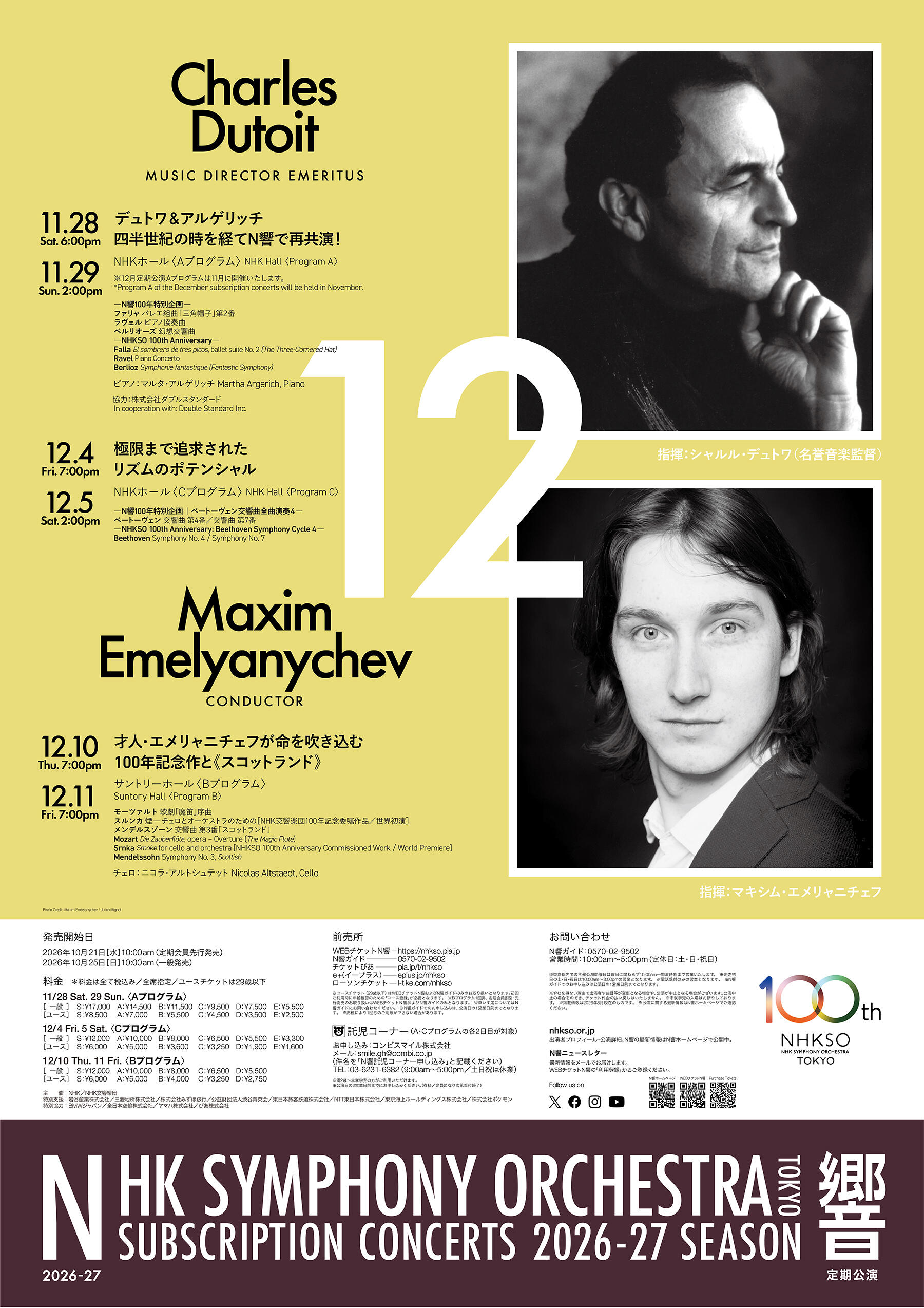
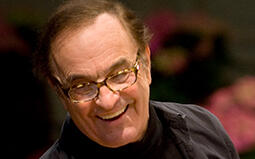 ConductorCharles Dutoit
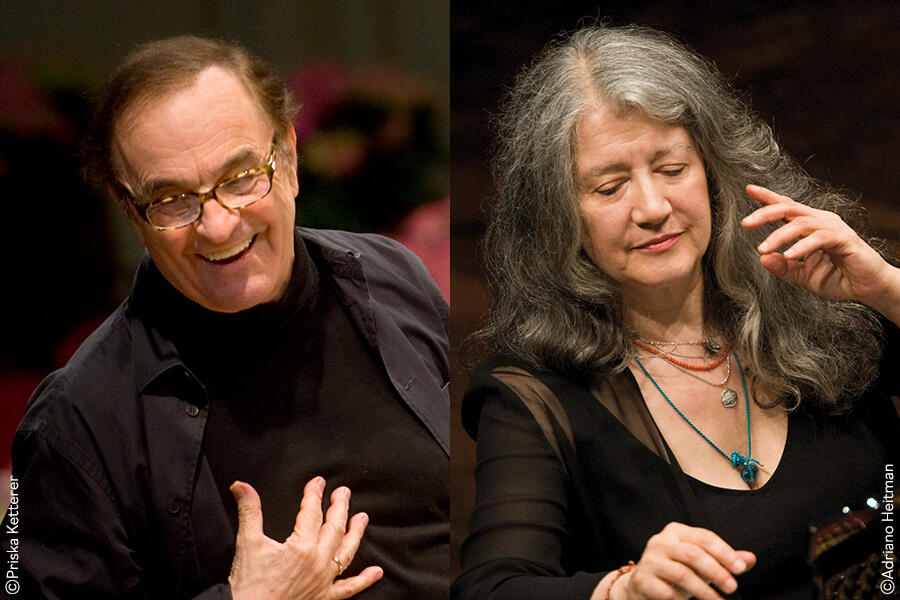
Charles Dutoit has captivated audiences throughout the world for over six decades with his charismatic, elegant, passionate and idiomatic interpretations. He is Music Director Emeritus of the NHK Symphony Orchestra after having served as its Principal Conductor (1996–1998) and Music Director (1998–2003).
Born in Lausanne in 1936, he commenced his career as a violinist, before participating in the conducting masterclasses given by Herbert von Karajan at the Lucerne Festival. He furthered his studies by attending the legendary Ernest Ansermet’s rehearsals in Geneva. Under Ansermet’s influence, he was able to cultivate his apprenticeship of the Ballets Russes composers: Stravinsky, Ravel and Debussy. In 1959, he made his professional conducting debut with the Orchestre de Chambre de Lausanne and Martha Argerich as soloist. During his first trip to the United States, he met Pierre Monteux and Charles Munch at the Tanglewood Music School.
Former Artistic Director and Principal Conductor of the Royal Philharmonic Orchestra, he enjoyed an artistic collaboration with the Philadelphia Orchestra for thirty-two years. He was Music Director of the Orchestre symphonique de Montréal for twenty-five years and held the same position with L’Orchestre National de France for ten years. His interest in mentoring young artists has led to positions as Music Director of the Pacific Music Festival in Sapporo and the Verbier Festival Orchestra.
His latest collaboration with the NHK Symphony Orchestra took place in 2025 with two programs featuring Messiaen and Holst as well as celebrating Ravel’s anniversary year. This marks his first appearance with Martha Argerich and the orchestra in Japan in three decades. The second program will have him focus on Beethoven as a part of the orchestra’s project commemorating the 200th anniversary of the German composer’s death.
[Kumiko Nishi]
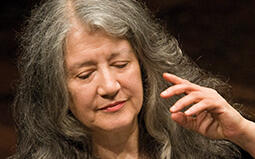 PianoMartha Argerich
Martha Argerich is considered one of the most prominent pianists in the world. Born in Buenos Aires in 1941, she took her first piano lessons at age 5. She continued her studies in Europe with Bruno Seidlhofer, Friedrich Gulda, Nikita Magaloff, Madeleine Lipatti, and Stefan Askenase. She won both the Bolzano (Busoni) and Geneva Piano Competitions, and followed suit with Warsaw’s Chopin Piano Competition.
These years, she furthers her long-standing and fruitful collaborations with top orchestras alongside eminent conductors such as Charles Dutoit, Daniel Barenboim and Zubin Mehta, while chamber music remains a significant part of her musical life.
To help young musicians, she became General Director of the MUSIC FESTIVAL Argerich’s Meeting Point in Beppu in Japan in 1998. In 1999 she created the International Piano Competition and Festival Martha Argerich in Buenos Aires and, in 2002, the Progetto Martha Argerich in Lugano. In 2018, she launched the Martha Argerich Festival in Hamburg.
This is her long-awaited first appearance with the NHK Symphony Orchestra in almost a quarter century since 2001 when she joined their European tour with Dutoit. For this reunion, again alongside Dutoit, she will perform Ravel’s Concerto in G major of which her interpretation has long been highly acclaimed.
[Kumiko Nishi]

Ticket
Single Tickets Release Date
Pre-sales for Subscribers:Wednesday, October 21, 2026 10:00am
*about subscribers
Sale to General Public:Sunday, October 25, 2026 10:00am
Price
| S | A | B | C | D | E | |
|---|---|---|---|---|---|---|
| Ordinary Ticket | 17,000 | 14,500 | 11,500 | 9,500 | 7,500 | 5,500 |
| Youth Ticket | 8,500 | 7,000 | 5,500 | 4,500 | 3,500 | 2,500 |
*Tax included
*Subscribers receive a 10% discount (Available at NHKSO WEB Ticket in Japanese and N-Kyo Guide)
*Pre-sales for subscribers are only available at NHKSO WEB Ticket (In Japanese) and N-Kyo Guide
*For wheelchair-accessible seats, please refer to the N-Kyo Guide
*Please note that single tickets may not be available depending on ticket price range
Youth Tickets
Youth Tickets are great options for those of 29 years old and younger
Subscription tickets
Release Date
ANNUAL SUBSCRIPTION TICKETS
Sun., July 12, 2026 10:00am
[For Subscribers: Sun., July 5, 2026 10:00am]
SEASONAL SUBSCRIPTION TICKETS (WINTER)
Fri., October 16, 2026 10:00am
[For Subscribers: Tue., October 13, 2026 10:00am]
Where to buy
NHKSO WEB Ticket | Sat., November 28 (In English / Seats not selectable on the English site)
NHKSO WEB Ticket | Sun., November 29 (In English / Seats not selectable on the English site)
NHKSO WEB Ticket (In Japanese / Seats selectable)
N-Kyo Guide (Purchase by telephone only)
Other Ticket Agents
Organized by: NHK (Japan Broadcasting Corporation) / NHK Symphony Orchestra, Tokyo
In cooperation with: Double Standard Inc.
*Repertoire, conductor, soloists and program order are subject to change without notice.
*Pre-school children are not allowed in the concert hall.
