
- Home
- Concerts
- Subscription Concerts
- Program B
- No. 2063 Subscription (Program B)
No. 2063 Subscription (Program B)
Suntory Hall
Google Map Seating Chart


Program
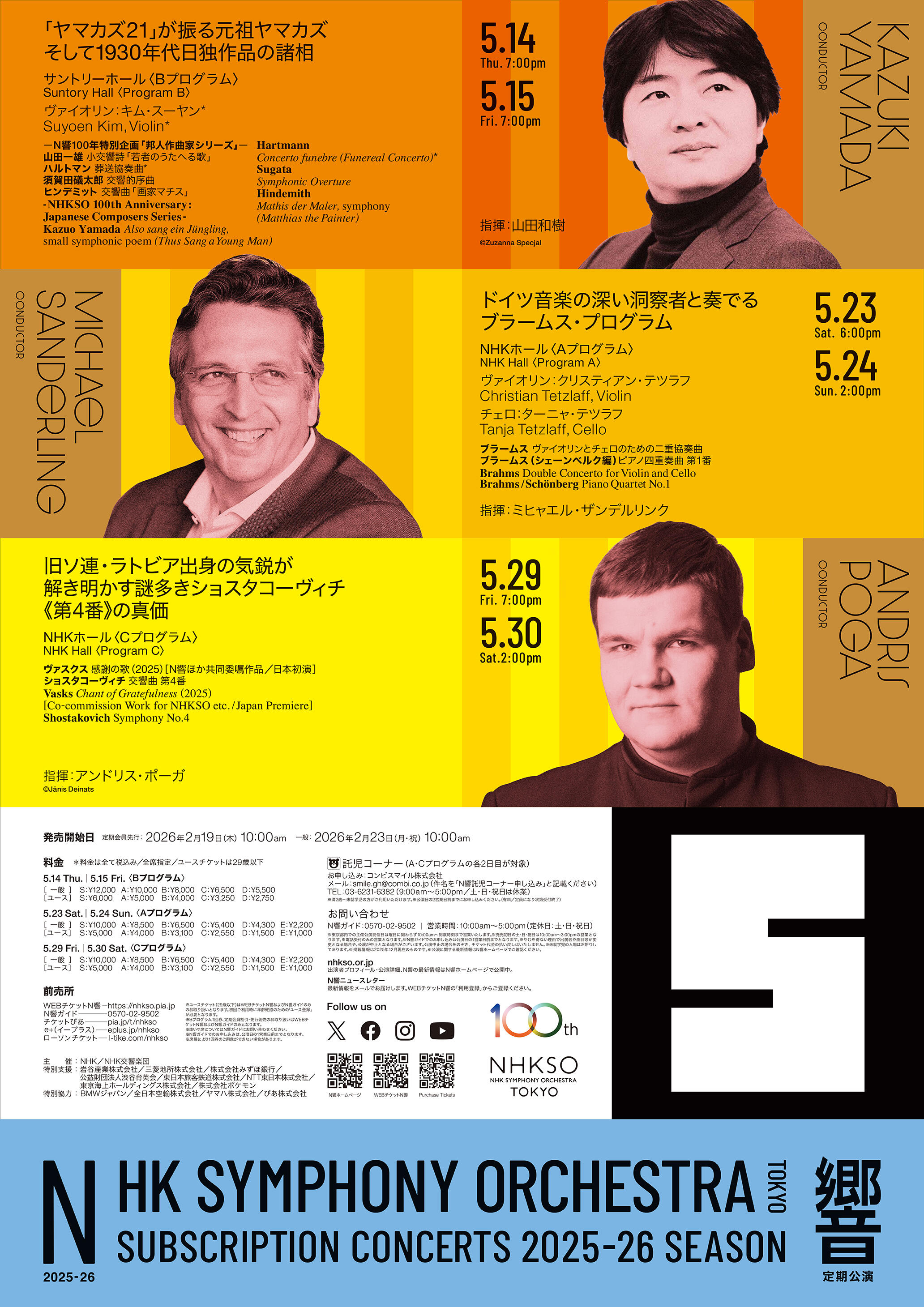
- NHKSO 100th Anniversary: Japanese Composers Series -
Kazuo Yamada / Also sang ein Jüngling, small symphonic poem (Thus Sang a Young Man)
All the works performed tonight were composed during a brief period in the 1930s, on the eve of the Second World War. None of the composers were directly involved in the fighting, but inevitably their lives were impacted by the turmoil of the war.
Nowadays, Kazuo Yamada (1912–1991) is generally remembered as a conductor who played an active role in the postwar orchestral scene in Japan, but in fact he started out as a composer. He studied the piano at the Tokyo Music School (now the Tokyo University of the Arts) and later composition with Klaus Pringsheim, who was a pupil of Mahler. Yamada won several prizes for his compositions including first prize in an NHK competition with his Prelude on Japanese Popular Songs for orchestra in 1937. He made his conducting debut in 1940, becoming assistant conductor of the New Symphony Orchestra (now the NHK Symphony Orchestra) in 1941 and Chief Conductor in 1942, a post he held until 1951.
Also sang ein Jüngling – the title is reminiscent of Mahler’s song cycle – won a prize at the 2nd Competition of Japanese Composers held by the New Symphony Orchestra and was premiered in February 1938 by its Chief Conductor Joseph Rosenstock along with four other works. It received two further performances by the orchestra in 1942, which Yamada conducted himself.
The work, which the composer called a small symphonic poem for large orchestra, is formed of two main sections and features flair and energy of the ambitious 25-year-old. According to his autobiography, “the piece weaves together the light and shadow of youth, distilling the very essence of my youthful, wild, and surging blood, passion, and message.”
[Nahoko Gotoh]
Hartmann / Concerto funebre (Funereal Concerto)*
German composer Karl Amadeus Hartmann (1905–1963) studied in Munich with Joseph Haas and Hermann Scherchen. A dedicated anti-fascist, Hartmann withdrew completely from German musical life during the Nazi years and refused to allow his music to be played in Germany, although they were performed abroad.
After the war, his reputation was restored and he was appointed dramaturg of the Bayerische Staatsoper. He also founded “Musica Viva,” a concert series for new music in Munich which was launched in October 1945 and continues to this day. His compositions include 8 symphonies, several works for solo instrument and orchestra/ensemble, 2 string quartets, opera Simplicius Simplicissimus, and several cantatas.
His Concerto funebre for violin and string orchestra was composed in 1939 and revised in 1959. Originally entitled Musik der Trauer (Music of Mourning), it was written out of anger and despair at Hitler’s annexation of Czechoslovakia, which is why the well-known Hussite hymn You who are God’s Warriors is quoted by the solo violin at the beginning. The four movements, performed without a break, consist of the sombre Introduction (Largo), the plaintive Adagio, the turbulent Allegro di molto (which includes a short cadenza for the violin), and the Choral (Slow March). The final movement incorporates the Russian song Immortal victims (quoted by Shostakovich in his Symphony No. 11) in the tutti, over which the violin soars upward. First performed in 1940 in St. Gallen in Switzerland, the work remains powerfully relevant today.
[Nahoko Gotoh]
Sugata / Symphonic Overture Op. 6
A contemporary of Kazuo Yamada, Yokohama-born Isotaro Sugata (1907–1952) was regarded as a promising composer in the 1930–40s; indeed, one of Sugata’s compositions won a prize at the same competition as Yamada’s Also sang ein Jüngling. He studied composition privately with Kosaku Yamada and Kiyoshi Nobutoki, and subsequently with Pringsheim. He composed many orchestral works in the 1940s, despite suffering from tuberculosis, but after the war his reputation faded, and following his death at the age of 44, he was soon forgotten. His music finally came to light in the early 2000s.
His Symphonic Overture, composed in 1939, won a prize at the competition celebrating the 2600th year of the Japanese Empire held by the NHK in 1940 and was broadcast on radio in February that year (performed by the predecessor of the NHKSO). The work strongly reflects his studies with Pringsheim and clearly takes the first movement of Hindemith’s Mathis der Maler Symphony as the model. It is formed of two sections, the introductory Andante Maestoso and the fugal Allegro energico, and concludes with a triumphant coda. His handling of the orchestral texture is clear and effective throughout.
The Kanagawa Philharmonic Orchestra gave the work’s revival in 2002.
[Nahoko Gotoh]
Hindemith / Mathis der Maler, symphony (Matthias the Painter)
The eldest among today’s four composers, Paul Hindemith (1895–1963) was one of the foremost German composers of the generation. Not only was he a versatile and prolific composer – he wrote 423 works – but he was an accomplished player on several instruments, including violin, viola, and clarinet. Early in his career, he was a violinist at the Frankfurt Opera Orchestra and played in string quartets. He also had interests in early music and was involved in the revival of instruments such as the viola d’amore and cornett. His compositional output includes 11 operas, many concertos, music for chamber ensemble, string quartets, sonatas for almost every orchestral instrument, and vocal works. His musical style changed over the years, but his mature music is characterized as neoclassical, combining expanded tonal harmony with contrapuntal texture. During World War II, he took an anti-Nazi stance, which led to his music being labeled as “degenerate” and banned. He escaped initially to Switzerland, and later to the U.S.A.
Mathis der Maler Symphony was composed in parallel with his opera of the same title about the German painter Mathias Grünewald (also known as Mathis Gothard Nithart, c.1475–1528) who is best known for his Isenheim Altarpiece, now housed in Colmar. The opera explores Grünewald’s struggle to find his place as an artist during times of political and social upheaval. The symphony, completed before the opera, was premiered in March 1934 by the Berliner Philharmoniker conducted by Wilhelm Furtwängler, who had commissioned the work.
The symphony consists of three movements, each inspired by one of the panels from the Isenheim Altarpiece. The first two movements, I Engelskonzert (Angelic Concert) and II Die Grablegung (Entombment), are extracted from the instrumental sections of the opera. The last movement, III Versuchung des heiligen Antonius (Temptation of St. Anthony), is a reworking of materials from Scene 6 of the opera in which Mathis is confronted by powerful visions.
[Nahoko Gotoh]
[Today's Encore]
Bach / Sonata No.2 for Solo Violin A Minor BWV1003 - 3rd mov. "Andante"
Violin: Suyoen Kim
Artists
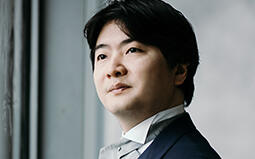 ConductorKazuki Yamada
Kazuki Yamada is the Music Director of the City of Birmingham Symphony Orchestra. Alongside his commitments in Birmingham, he is also Artistic and Music Director of Orchestre Philharmonique de Monte-Carlo and will become Chief Conductor and Artistic Director of the Deutsches Symphonie-Orchester Berlin from the 2026–27 season. In Japan, he holds further titles of Artistic Director (Music) of Tokyo Metropolitan Theatre and Music Director of Yokohama Sinfonietta and the Philharmonic Chorus of Tokyo.
Yamada’s passionate and collaborative approach to conducting means he commands a busy international diary of concerts, opera, and choral conducting. In recent years, he made debut appearances with the Berliner Philharmoniker, Filarmonica della Scala, Swedish Radio Symphony Orchestra, The Cleveland Orchestra, New York Philharmonic, and San Francisco Symphony. He continues regular guesting commitments with Orchestra dell’Accademia Nazionale di Santa Cecilia, Orchestre National du Capitole de Toulouse, Orchestre National de France, and Orchestre Philharmonique du Luxembourg.
Yamada performs with distinguished soloists such as Emanuel Ax, Leif Ove Andsnes, Seong-Jin Cho, Isabelle Faust, Martin Helmchen, Nobuko Imai, Lucas and Arthur Jussen, Alexandre Kantorow, Evgeny Kissin, Yunchan Lim, Bruce Liu, Krystian Zimerman, and Frank Peter Zimmermann.
Strongly committed to his role as an educator, Yamada appears annually as a guest artist at the Seiji Ozawa International Academy Switzerland and is keenly involved in the CBSO’s outreach programme. Yamada studied music at Tokyo University of the Arts, and he first achieved international attention upon receiving first prize in the 51st International Besançon Competition for Young Conductors in 2009.
For more than a decade, Yamada has collaborated regularly with the NHK Symphony Orchestra, conducting a wide range of works with particular emphasis on French repertoire and music by Japanese composers of the twentieth century.
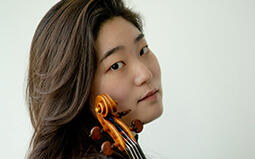 Violin*Suyoen Kim
Prizewinner at the Queen Elisabeth International Music Competition in Brussels and the International Joseph Joachim Violin Competition in Hannover, violinist Suyoen Kim has appeared as a soloist with renowned orchestras such as the Deutsche Kammerphilharmonie Bremen, Norrlandsoperan Symphony Orchestra, Hermitage Theatre Orchestra St. Petersburg, Copenhagen Philharmonic, Münchner Symphoniker, Bayerische Kammerphilharmonie, Orchestre Philharmonieque de Strasbourg, and Seoul Symphony Orchestra. She has performed with internationally acclaimed conductors such as Kurt Masur, Eliahu Inbal, Myung-Whun Chung, Jan Latham-Koenig, Peter Ruzicka and Walter Weller. Her recording of Karl Amadeus Hartmann’s Concerto funebre with the Bayerische Kammerphilharmonie was recommended by BBC Radio 3 as the best available recording of this concerto.
Suyoen Kim is first concertmaster of the Konzerthausorchester Berlin since January 2018 and was previously a member of the Artemis Quartet.
Born in Münster, Germany in 1987, she received her first violin lessons when she was five years old. At the age of nine, she enrolled at the Musikhochschule Münster, studying with Professor Helge Slaatto. After receiving her degree, she continued her studies with Professor Ana Chumachenco, graduating from the Hochschule für Musik und Theater München with a Masters in 2010, and from the Kronberg Academy in 2012.
This is her first appearance with the NHK Symphony Orchestra.
Download

Ticket
Program B
No. 2063 Subscription (Program B)
Suntory Hall
Google Map
Seating Chart
Single Tickets Release Date
Pre-sales for Subscribers:Thursday, February 19, 2026 10:00am
*about subscribers
Sale to General Public:Monday, February 23, 2026 10:00am
Price
| S | A | B | C | D | |
|---|---|---|---|---|---|
| Ordinary Ticket | 12,000 | 10,000 | 8,000 | 6,500 | 5,500 |
| Youth Ticket | 6,000 | 5,000 | 4,000 | 3,250 | 2,750 |
*tax included
*Subscribers receive a 10% discount (Available at NHKSO WEB Ticket and N-Kyo Guide)
*For wheelchair-accessible seats, please refer to the N-Kyo Guide
*Please note that single tickets may not be available depending on ticket price range
Youth Tickets
Youth Tickets are great options for those of 29 years old and younger
Subscription tickets
Release Date
ANNUAL SUBSCRIPTION TICKETS
Sun., July 13, 2025 10:00am
[For Subscribers: Sun., July 6, 2025 10:00am]
Where to buy
NHKSO WEB Ticket | Thu., May 14 (In English / Seats not selectable on the English site)
NHKSO WEB Ticket | Fri., May 15 (In English / Seats not selectable on the English site)
NHKSO WEB Ticket (In Japanese / Seats selectable)
N-Kyo Guide (Purchase by telephone only)
Organized by: NHK (Japan Broadcasting Corporation) / NHK Symphony Orchestra, Tokyo
*Repertoire, conductor, soloists and program order are subject to change without notice.
*Pre-school children are not allowed in the concert hall.
