
- Home
- Concerts
- Subscription Concerts
- Program A
- No. 2057 Subscription (Program A)
No. 2057 Subscription (Program A)


Program
Schumann / Symphony No. 3 E-flat Major Op. 97, Rheinische (Rhenish)
Flowing through several European countries including Germany, the Rhine River has fascinated countless poets and artists for centuries. For them, its natural beauty, historical and cultural richness, and diverse legends and tales such as the Siren of Lorelei have been an endless source of inspiration. In music, among the best-known examples are Robert Schumann (1810–1856)’s Symphony No. 3 Rheinische (Rhenish) and Wagner’s after-mentioned Der Ring des Nibelungen (The Ring of the Nibelung), an epic cycle of music dramas around the all-powerful ring made of the Rhine’s magical gold.
Schumann composed the Symphony No. 3 with astonishing speed in late 1850, soon after settling in Düsseldorf. Immediately on his arrival at this German city along the Rhine, he received an enthusiastic welcome as the new music director in charge of the municipal orchestra and choir. This bright moment brought some mental stability to Schumann, who chronically suffered severe and sometimes life-threatening depression throughout his adult life. Eventually, he would jump into the wintry Rhine in February 1854, prior to his two-year confinement in a sanitarium and subsequent passing at age 46.
Although the nickname “Rheinische (Rhenish)” was not given by Schumann himself, this hope-filled symphony is closely linked to his new life by the river. It is said that the composer’s creativity was greatly urged by his daily riverside promenade and two travels along the Rhine to Cologne in September and November 1850.
The Symphony No. 3 is in five movements. The opening movement “Lebhaft (lively)” in sonata form immediately introduces the first theme flowing like water with syncopations (displacement of accents). The heroic character of the music evokes Beethoven’s Symphony Eroica (Heroic), also No. 3 and in E-flat major. Incidentally, this key will open Wagner’s Das Rheingold (The Rhinegold), the first of The Ring, as well.
Schumann’s fourth movement “Feierlich (solemn),” opened by a trombone and horn chorale-like melody, invites us to the majestic Cologne Cathedral that he was deeply impressed with while travelling. More concretely, this movement “in the character of a procession for a solemn ceremony” (his own words) is thought to refer to the news he heard of about the 1850 ceremony of the Archbishop of Cologne being created cardinal. The euphoric fifth and final movement, again in E-flat major, features a bucolic danceable mood boosted by festive brass fanfares.
[Kumiko Nishi]
Wagner / Götterdämmerung, opera - Siegfrieds Rheinfahrt, Siegfrieds Trauermarsch, Brünnhildes Schlussgesang: Starke Scheite schichtet mir dort* (Twilight of the Gods - Siegfried’s Rhine Journey, Siegfried’s Funeral March, Brünnhilde’s Immolation)
Based on German and Scandinavian legends, Der Ring des Nibelungen (The Ring of the Nibelung) consists of four music dramas: Das Rheingold (The Rhinegold), Die Walküre (The Valkyrie), Siegfried and Götterdämmerung (Twilight of the Gods). They take approximately fifteen hours to perform in total. Richard Wagner (1813–1883) wrote both the libretto and music of this monumental cycle where the drama and the music are indissolubly united on an unprecedented level, especially by the scrupulous use of the numerous leitmotifs (recurrent melodic or/and harmonic elements representing certain characters, feelings, things or so).
The intricate plot features gods and mortals battling for the above-mentioned cursed magical ring to have the power to rule the world. It is also a dramatic tale of a dysfunctional family starting from Wotan (king of the gods) and his wife Fricka (goddess of marriage). Wotan’s grandson, Siegfried is a fearless hero who is mortal because of his human grandmother whom Wotan committed adultery with. Brünnhilde is Wotan’s immortal daughter and one of the Valkyries (warrior maidens). She is deprived of immortality for disobeying her father who puts her into a long sleep fenced around with the magic fire that only a true hero would not fear. Young Siegfried becomes the owner of the ring by slaying a dragon, and goes to wake his aunt Brünnhilde up. Immediately, they fall in love with each other.
Concluding the cycle, Götterdämmerung (Twilight of the Gods) embodies a culmination of Wagner’s artistic career. The Prologue is set on a rocky mountaintop where Siegfried gives Brünnhilde the ring as a pledge of fidelity. He then leaves alone for the Rhine to do more deeds: Siegfrieds Rheinfahrt (Siegfried’s Rhine Journey) is an orchestral interlude with spirited horn calls representing his braveness. On the river bank, a potion is used on Siegfried, who loses his memory of Brünnhilde. This is a trap by Hagen (son of an evil Nibelung dwarf) wanting the ring, and he subsequently stabs Siegfried to death in the back, his only weak spot. The orchestral interlude Siegfrieds Trauermarsch (Siegfried’s Funeral March) entwines different leitmotifs including “death” with two hammer-like repeated chords. Brünnhildes Schlussgesang (Brünnhilde’s Immolation) lets the heroine start to sing “Pile mighty logs high on the riverside!” She burns herself on her beloved man’s funeral pyre, returning the ring to the Rhinemaidens, the guardians of the Rhinegold. The river overflows, drowning Hagen. This curtain-fall-music is ended peacefully by the “redemption-through-love” leitmotif on strings suggesting Brünnhilde’s self-sacrifice broke the curse of the ring.
[Kumiko Nishi]
Artists
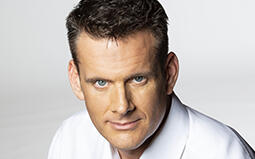 ConductorPhilippe Jordan
Hailing from an artistic Swiss family, Philippe Jordan is regarded as one of the most distinguished and important conductors of his generation, with an international career spanning the world’s foremost opera houses, festivals, and symphony orchestras.
He was Music Director of the Wiener Staatsoper from September 2020 until June 2025, leading numerous outstanding new productions including Wagner’s works and an entirely new Da Ponte cycle by Mozart. In his final season, he conducted Wagner’s Der Ring des Nibelungen and in October 2025 he led the opera house’s Japanese tour with R. Strauss’s Der Rosenkavalier. From 2009 to 2021, he was Music Director of the Opéra national de Paris where he conducted a concert version of Der Ring des Nibelungen and numerous major productions.
As a concert conductor, he has collaborated with the world’s most prestigious orchestras including the Berliner and Wiener Philharmoniker, Royal Concertgebouw Orchestra and the Chicago Symphony Orchestra. At the beginning of the 2027/28 season, he will assume the position of Music Director of L’Orchestre National de France.
He was, early in his career, Kapellmeister and assistant to Daniel Barenboim at the Staatsoper Berlin, before he became the Staatsoper Berlin’s Principal Guest Conductor and the Wiener Symphoniker’s Chief Conductor, and debuted at the Metropolitan Opera, Royal Opera House, Covent Garden, Teatro alla Scala, the festivals in Aix-en-Provence, Glyndebourne and Salzburg, to name a few.
He made his debut at the Bayreuter Festspiele in 2012 with Parsifal and returned in 2017 with a new production of Die Meistersinger von Nürnberg, which he conducted in subsequent seasons as well. The program for his NHK Symphony Orchestra debut consists of selections from Wagner’s opera Götterdämmerung (Twilight of the Gods) combined with Schumann’s Symphony No. 3 Rhenish.
 Soprano*Tamara Wilson
Grammy Award winning soprano Tamara Wilson continues to garner international recognition for her interpretations of Verdi, Mozart, R. Strauss and Wagner and is the recipient of the prestigious Richard Tucker Award.
The 2025/26 season highlights include a debut with Festival d’Aix-en-Provence in R. Strauss’s Die Frau ohne Schatten, a return to the Opéra national de Paris for new productions of Wagner’s Die Walküre and Siegfried (as Brünnhilde) under the baton of Pablo Heras-Casado, appearances with the Houston Symphony (Tristan und Isolde) and The Cleveland Orchestra (War Requiem).
She regularly sings at the world’s leading opera houses including The Metropolitan Opera, Teatro alla Scala, Bayerische Staatsoper, Oper Frankfurt, Deutsche Oper Berlin, Opernhaus Zürich, Washington National Opera and the English National Opera. She has enjoyed collaboration with the world’s foremost orchestras such as the Chicago Symphony Orchestra, New York Philharmonic, Royal Concertgebouw Orchestra, Swedish Radio Symphony Orchestra among others, under the batons of renowned conductors including Seiji Ozawa, James Conlon, Gustavo Dudamel, Yannick Nézet-Séguin, Leonard Slatkin and Franz Welser-Möst to name a few.
This is her first collaboration with the NHK Symphony Orchestra since 2010 when she served as a soloist for their end-of-the-year concerts of Beethoven’s Choral Symphony No. 9.
Download

Ticket
Single Tickets Release Date
Pre-sales for Subscribers:Wednesday, October 22, 2025 10:00am
*about subscribers
Sale to General Public:Sunday, October 26, 2025 10:00am
Price
| S | A | B | C | D | E | |
|---|---|---|---|---|---|---|
| Ordinary Ticket | 10,000 | 8,500 | 6,500 | 5,400 | 4,300 | 2,200 |
| Youth Ticket | 5,000 | 4,000 | 3,100 | 2,550 | 1,500 | 1,000 |
*tax included
*Subscribers receive a 10% discount (Available at NHKSO WEB Ticket and N-Kyo Guide)
*For wheelchair-accessible seats, please refer to the N-Kyo Guide
*Please note that single tickets may not be available depending on ticket price range
Youth Tickets
Youth Tickets are great options for those of 29 years old and younger
Subscription tickets
Release Date
ANNUAL SUBSCRIPTION TICKETS
Sun., July 13, 2025 10:00am
[For Subscribers: Sun., July 6, 2025 10:00am]
SEASONAL SUBSCRIPTION TICKETS (WINTER)
Fri., October 17, 2025 10:00am
[For Subscribers: Tue., October 14, 2025 10:00am]
Where to buy
NHKSO WEB Ticket | Sat., February 7 (In English / Seats not selectable on the English site)
NHKSO WEB Ticket | Sun., February 8 (In English / Seats not selectable on the English site)
NHKSO WEB Ticket (In Japanese / Seats selectable)
N-Kyo Guide (Purchase by telephone only)
Other Ticket Agents
Organized by: NHK (Japan Broadcasting Corporation) / NHK Symphony Orchestra, Tokyo
*Repertoire, conductor, soloists and program order are subject to change without notice.
*Pre-school children are not allowed in the concert hall.
