
- Home
- Concerts
- Subscription Concerts
- Program C
- No. 2055 Subscription (Program C)
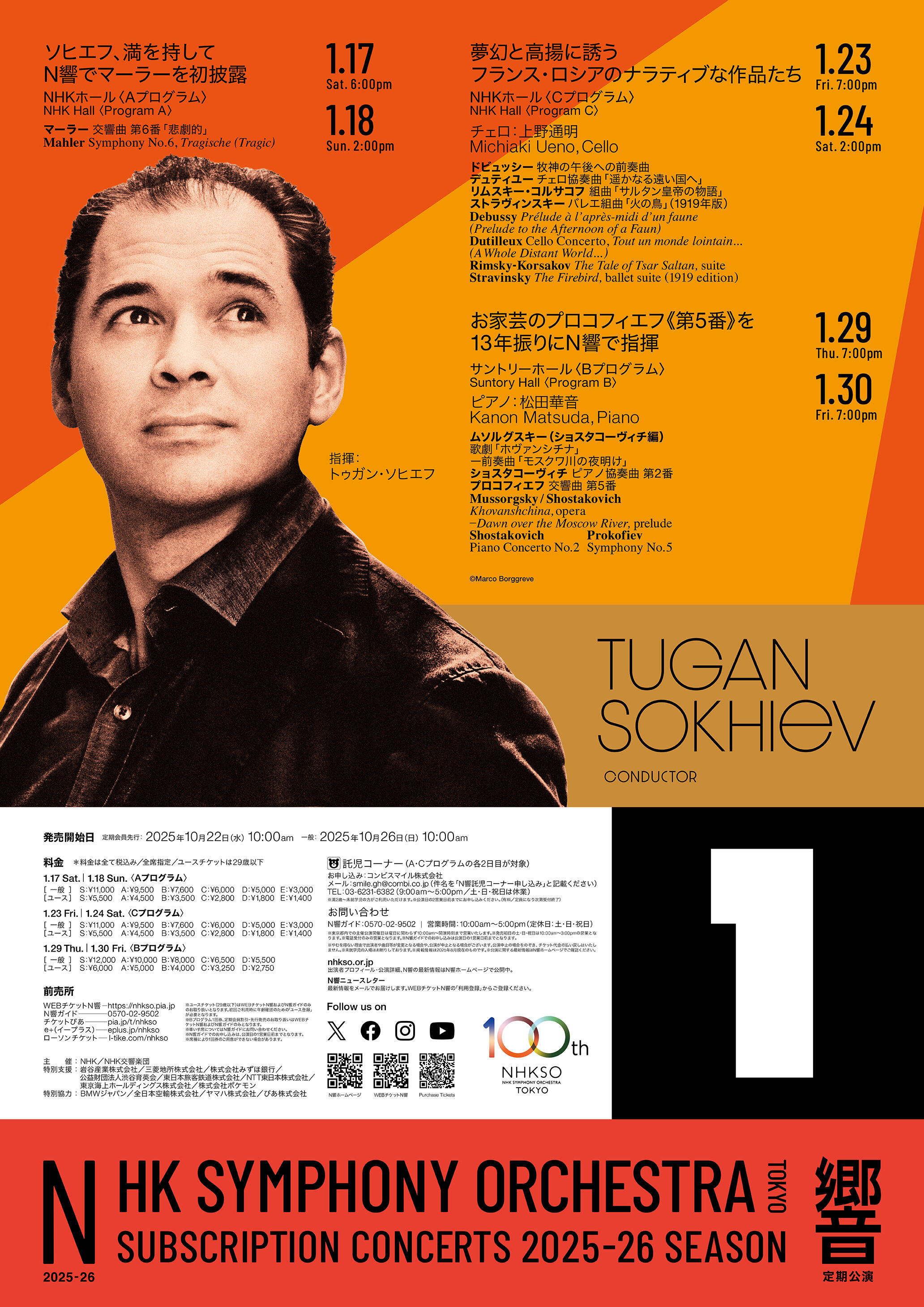
No. 2055 Subscription (Program C)


Program
Debussy / Prélude à l’après-midi d’un faune (Prelude to the Afternoon of a Faun)
By leaving the traditional language in terms of harmony, form and tone color, French composer Claude Debussy (1862–1918) had a great influence on music history in the 20th century.
In his early years, Debussy was an admirer of Richard Wagner (1813–1883) until his 1889 visit to Bayreuth awoke him to the limits of the German composer’s musical language. Debussy pursued modernity as an antidote for the Wagnerism and excessively emotional late-Romanticism, through more objective approaches and suggestion of atmospheres or feelings. He famously violated major rules of conventional harmonic practice to produce tonal ambiguity, for which he also utilized whole tone and pentatonic (five-note) scales and medieval church modes.
First performed in 1894 in Paris, Prélude à l’après-midi d’un faune (Prelude to the Afternoon of a Faun) is considered a breakthrough for Debussy’s quest. It is a free musical illustration of the French Symbolist poet Stéphane Mallarmé (1842–1898)’s poem L’après-midi d’un faune set in a languorous summer day, where the mythical god of the woods, waking from his nap, chases nymphs before going back to sleep. The opening melismatic solo is entrusted to the flute, as the faun is a pan flute player. This languid melody recurs several times in different ways to unite the dreamy prelude. Later in 1912, a modern ballet set to this music by the later-mentioned Ballets Russes would go on to create a great scandal in Paris with its highly sensual choreography.
[Kumiko Nishi]
Dutilleux / Cello Concerto, Tout un monde lointain... (A Whole Distant World...)
Born in France two years before Debussy passed away, Henri Dutilleux (1916–2013) followed his own path in the tradition of Debussy and Maurice Ravel (1875–1937). Although inspired by the twelve-tone technique developed by Arnold Schönberg (1874–1951) and Pierre Boulez (1925–2016), Dutilleux kept avant-garde conventions at an arm’s length to leave us crystalline, meticulously polished works abundant in poetic quality.
Dutilleux liked to compose for specific musicians including the eminent pianist Geneviève Joy, his wife, and Mstislav Rostropovich. For the Russian cellist, the composer wrote the present concerto Tout un monde lointain... (A Whole Distant World... ) (1970), Trois strophes sur le nom de Sacher (Three Stanzas on the Name of Sacher) (1982) and Slava’s Fanfare (1997). Rostropovich also premiered one of Dutilleux’s orchestral pieces as a conductor.
Tout un monde lointain... consists of five movements performed without break. This profound title is quoted from the book of poetry Les Fleurs du mal (The Flowers of Evil) by French poet Charles Baudelaire, as with the epigraphs set at the beginnings of the movements (of which only the translations are listed below for easier reading).
I Énigme (Enigma: “…And in that symbolic and strange nature…”) opens with a twelve-tone theme introduced by the recitativo-like cello solo. This theme will play a key role throughout the entire work. Slow and quiet, II Regard (Gaze: “…the poison which flows / From your eyes, from your green eyes, / Lakes where my soul trembles and sees itself overturned…”) is followed by III Houles (Surges: “…Sea of ebony, you contain a dazzling dream / Of sails, of rowers, of pennants and of masts…”) in the style of scherzo. Headed “ecstatic,” IV Miroirs (Mirrors: “…Our two hearts will be two enormous torches / Which will reflect their double lights / In our two spirits, those twin mirrors…”) is the other slow movement of this symmetrically-structured concerto. V Hymne (Hymn: “…Keep your dreams: / Wise men do not have such beautiful ones as fools!…”) begins with an orchestral eruption which leads to the solo cello’s virtuosic turbulence.
[Kumiko Nishi]
Rimsky-Korsakov / The Tale of Tsar Saltan, suite Op. 57
Nikolai Rimsky-Korsakov (1844–1908) is known as a member of The Mighty Handful a.k.a The Five, along with Modest Mussorgsky (1839–1881) and others. Formed around 1860, this Saint-Petersburg-based circle of young “Sunday composers” shared an aspiration to develop a nationalist school of Russian classical music inspired by folk elements. One of their stances was being anti-academic: Rimsky-Korsakov at the naval service, however, took a step into the academic world in 1871 becoming a professor of the Saint Petersburg Conservatory. Rehearsing the student orchestra there improved his already-acute scoring sense and, in parallel, his new duties as the Inspector of Naval Bands from 1873 deepened his knowledge of wind instruments. His peerlessly masterful orchestration skill will be fully displayed in his later works including Sheherazade (1888).
Composed in 1899–1900, The Tale of Tsar Saltan is an opera based on a fairytale by Aleksandr Pushkin. Worthy of special mention is that Rimsky-Korsakov’s fairy-tale operas including this work and The Golden Cockerel will inspire Stravinsky (described below) and Sergei Prokofiev (1891–1953), among others.
The Tale of Tsar Saltan is set in a coastal kingdom. The Tsar leaves for a distant battlefield, before the Tsarina and their baby son Gvidon are put in a barrel and tossed into the sea through an evil trick of the envious sisters of the Tsarina. She and Gvidon land on a magical island to settle there. As time passes, Gvidon saves the life of a swan which turns out to be the Princess of the island. They marry. The Tsar’s visit to the island reunites the family with a happy ending.
The suite gathers the opera’s three instrumental pieces opened respectively by a kingly trumpet fanfare. I The Tsar’s Farewell and Departure (Introduction to Act I), a spirit-stirring march, is followed by II The Tsarina and Her Son in a Barrel at Sea (Introduction to Act II), a dramatic musical seascape depicted by the former navy officer Rimsky-Korsakov. The title of III The Three Wonders (Introduction to Act IV, Sc. 2) refers to the wonders of the island that the Tsar hears of from sailors and longs to experience.
[Kumiko Nishi]
Stravinsky / The Firebird, ballet suite (1919 edition)
Born near Saint Petersburg and raised in a musically rich environment, Igor Stravinsky (1882–1971) studied composition under Rimsky-Korsakov whom he met in 1902. Grieved at the news of his teacher’s death in 1908, the young man is said to have taken a two-and-a-half-day train ride to attend the funeral.
The next year, Stravinsky worked in collaboration for the first time with the Russian impresario Sergei Diaghilev and his dance company, the Ballets Russes. He was one of the four Russian composers who orchestrated Frédéric Chopin’s piano music for the ballet Les Sylphides. Premiered in Paris, it received critical acclaim, except that the utilization of the pre-existing music didn’t impress discerning Parisian critics. This led Diaghilev’s next project The Firebird to require newly written music. After some twists and turns, Stravinsky was assigned the job and dedicated the score to his late teacher’s son Andrey Rimsky-Korsakov.
Premiered in 1910 causing a great sensation in Paris, The Firebird ushered in Stravinsky’s “primitivistic” style alongside his scores Petrushka (1911) and The Rite of Spring (1913) for the Ballets Russes. With his modernist approaches, Stravinsky leaped to international fame.
The colorful, dazzling ballet score The Firebird for a colossal orchestra testifies to us how skillful in orchestration the former pupil of Rimsky-Korsakov was. The concert suite for a reduced orchestra (1919) was prepared by financially-strapped Stravinsky following the Russian Revolution and World War I. This suite with more economy and clarity reflects his aesthetic transition to the neo-classicism at the time, while retaining the original folkish vibrancy.
In the plot based on Russian fairy tales, Prince Ivan, pursuing The Firebird, strays into the magical garden of the evil Kastcheï the Immortal. Ivan captures The Firebird but frees her, then falls in love with one of thirteen Princesses, Kastcheï ’s captives. Kastcheï appears and tries to turn Ivan into stone, before The Firebird enchants Kastcheï and his minions so they start the wild dance (IV Danse infernale du roi Kastcheï [Infernal Dance of King Kastcheï]) known for its brass glissandos (glides). Tired, they fall asleep (V Berceuse [Lullaby]). Ivan defeats Kastcheï following The Firebird’s advice, and marries the Princess.
[Kumiko Nishi]
[Encore]
Alexander Tcherepnin / Cello Suite Op. 76 - No. 2
Cello : Michiaki Ueno
Artists
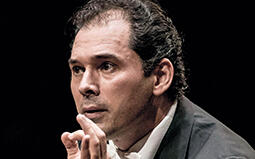 ConductorTugan Sokhiev
Internationally renowned conductor Tugan Sokhiev, one of the last students of legendary teacher Ilya Musin at the St. Petersburg Conservatory, divides his time between the symphonic and operatic repertoire. He enjoys close and privileged relationships with orchestras such as the Wiener, Berliner and Münchner Philharmoniker orchestras, Staatskapelle Berlin, Staatskapelle Dresden, Symphonieorchester des Bayerischen Rundfunks and Gewandhausorchester Leipzig. Outside Europe, he is invited to conduct the finest U.S. orchestras including the Boston and Chicago Symphony Orchestras.
As Music Director of the Orchestre National du Capitole de Toulouse from 2008 to 2022, he propelled the orchestra to international prominence. Passionate about his work with singers, he was Music Director and Chief Conductor of the Bolshoi Theatre in Moscow from 2014 to 2022.
Recently, he has conducted a new production of Iolanta at the Wiener Staatsoper and given tours with the Wiener Philharmoniker (Asia), the Münchner Philharmoniker (Asia and Europe) and the Staatskapelle Dresden (Europe), conducting the Wiener Philharmoniker’s celebrated Sommernachtskonzert in the Schönbrunn Palace. He also led several highly acclaimed concerts of the Philharmonic Brass, the elite brass ensemble made up of members of the Berliner and Wiener Philharmoniker & Friends.
He made his NHK Symphony Orchestra debut in 2008 conducting Shostakovich’s Symphony No. 5 that he will revisit with the orchestra this time, Prokofiev’s Violin Concerto No. 2 and others. Since his first appearance at their subscription concerts in 2013, he has spent several weeks almost every year with the orchestra. For this season, he programed orchestral works by Mahler and Russian composers, coupling them with Shostakovich’s and Dutilleux’s concertos to collaborate with promising Japanese soloists Kanon Matsuda and Michiaki Ueno.
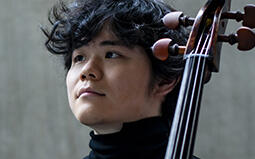 CelloMichiaki Ueno
The winner of the Geneva International Music Competition (2021), Bonn’s prestigious Beethoven Ring Award (2024) and the International Johannes Brahms Competition (2014), Japanese cellist Michiaki Ueno is one of the most promising artists on the classical music scene.
Born in Paraguay in 1995, he started cello at age 5 and gave his first concerto performance at the Suntory Hall at age 11, before becoming the first ever Japanese winner of the International Tchaikovsky Competition for Young Musicians in 2009. He studied with Pieter Wispelwey at the Robert Schumann Hochschule Düsseldorf and with Gary Hoffman at the Queen Elisabeth Music Chapel in Belgium.
As a soloist, he has performed with numerous orchestras including the Orchestre de la Suisse Romande, Warsaw Philharmonic, Lahti Symphony Orchestra, Gyeonggi Philharmonic Orchestra, KBS Symphony Orchestra and most Japanese major orchestras. He made his NHK Symphony Orchestra debut in June 2024 with Dvořák’s cello concerto, and this will be his first appearance at their subscription concert.
He performs on two fine instruments: a 1730 “Feuermann” Stradivarius, on loan from the Nippon Music Foundation, and using a F. Tourte bow on loan from the Sumino Hiroshi Collection.
Download

Ticket
Single Tickets Release Date
Pre-sales for Subscribers:Wednesday, October 22, 2025 10:00am
*about subscribers
Sale to General Public:Sunday, October 26, 2025 10:00am
Price
| S | A | B | C | D | E | |
|---|---|---|---|---|---|---|
| Ordinary Ticket | 11,000 | 9,500 | 7,600 | 6,000 | 5,000 | 3,000 |
| Youth Ticket | 5,500 | 4,500 | 3,500 | 2,800 | 1,800 | 1,400 |
*tax included
*Subscribers receive a 10% discount (Available at NHKSO WEB Ticket and N-Kyo Guide)
*For wheelchair-accessible seats, please refer to the N-Kyo Guide
*Please note that single tickets may not be available depending on ticket price range
Youth Tickets
Youth Tickets are great options for those of 29 years old and younger
Subscription tickets
Release Date
ANNUAL SUBSCRIPTION TICKETS
Sun., July 13, 2025 10:00am
[For Subscribers: Sun., July 6, 2025 10:00am]
SEASONAL SUBSCRIPTION TICKETS (WINTER)
Fri., October 17, 2025 10:00am
[For Subscribers: Tue., October 14, 2025 10:00am]
Where to buy
NHKSO WEB Ticket | Fri., January 23 (In English / Seats not selectable on the English site)
NHKSO WEB Ticket | Sat., January 24 (In English / Seats not selectable on the English site)
NHKSO WEB Ticket (In Japanese / Seats selectable)
N-Kyo Guide (Purchase by telephone only)
Other Ticket Agents
Organized by: NHK (Japan Broadcasting Corporation) / NHK Symphony Orchestra, Tokyo
*Repertoire, conductor, soloists and program order are subject to change without notice.
*Pre-school children are not allowed in the concert hall.
